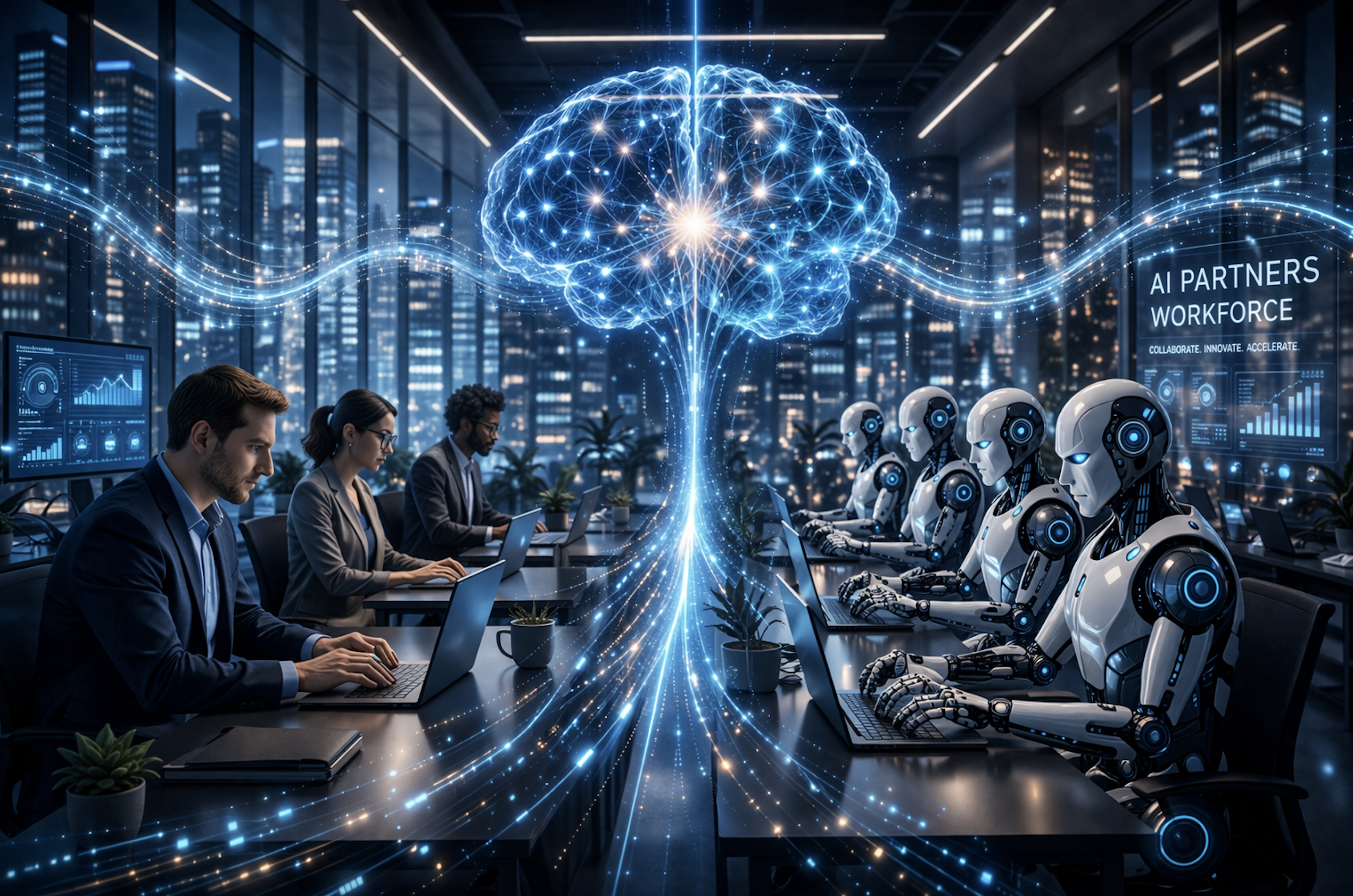
In a major shift that could redefine the global workforce, leading AI companies including OpenAI, Google, and Microsoft are rapidly advancing "AI agents" capable of performing complex, multi-step tasks traditionally handled by humans.
Unlike earlier chatbots, these new systems can plan, execute, and adapt autonomously. They now perform handling everything from writing production-ready code to managing business workflows and even coordinating other AI systems. This evolution marks a transition from passive AI tools to active digital workers.
The latest models are being integrated into enterprise environments at an unprecedented pace. Companies are already deploying AI agents to automate customer support, software testing, data analysis, and internal operations. Early adopters report productivity gains of up to 40%, according to internal benchmarks shared by industry leaders.
However, the rapid adoption is raising serious questions. Labor experts warn that knowledge workers, especially in tech, finance, and marketing, could face significant disruption. At the same time, regulators are struggling to keep pace with the technology’s capabilities, particularly around accountability and decision-making authority.
Executives at Microsoft have described this moment as "the next phase of the AI revolution," while researchers at OpenAI emphasize the importance of aligning these systems with human intent and safety standards.
Meanwhile, startups are racing to build "agent-first" platforms, signaling a broader industry shift toward autonomous AI ecosystems rather than standalone tools.
As AI agents become more capable and widely deployed, one thing is clear: the line between human and machine work is rapidly blurring.